Women Human Rights Defenders Bring the Intersection of Gender, Conflict and Environmental Justice to the UN
Environmental justice and conflicts are often treated as separate global challenges. Yet both are deeply rooted in systems of power that shape access to land and natural resources, deepen inequalities and put those who defend their communities and the environment at risk. Women human rights defenders (WHRDs) organise, resist and protect the people and ecosystems on which their communities depend. They face gender-specific threats in increasingly hostile contexts for who they are and what they do.
.
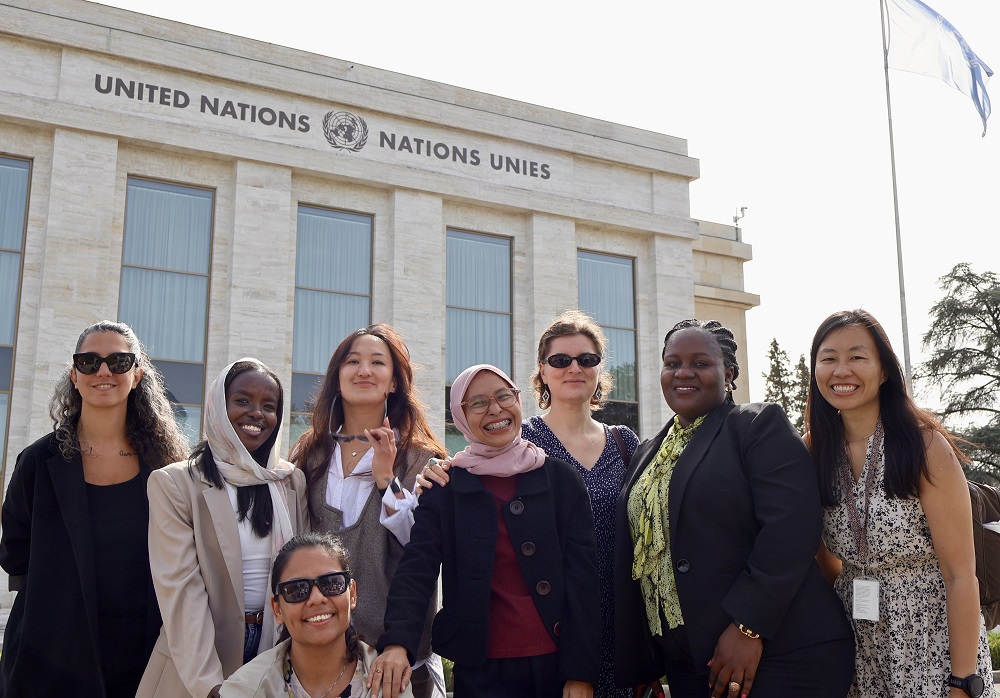
From 21 to 25 September 2026, the Women Human Rights Defenders Advocacy Week in Geneva brought these experiences to the United Nations, creating space for eleven defenders to exchange strategies, engage with international human rights mechanisms and call for action on gender and environmental justice, and conflict resolution.
Women human rights defenders speak out at the Human Rights Council
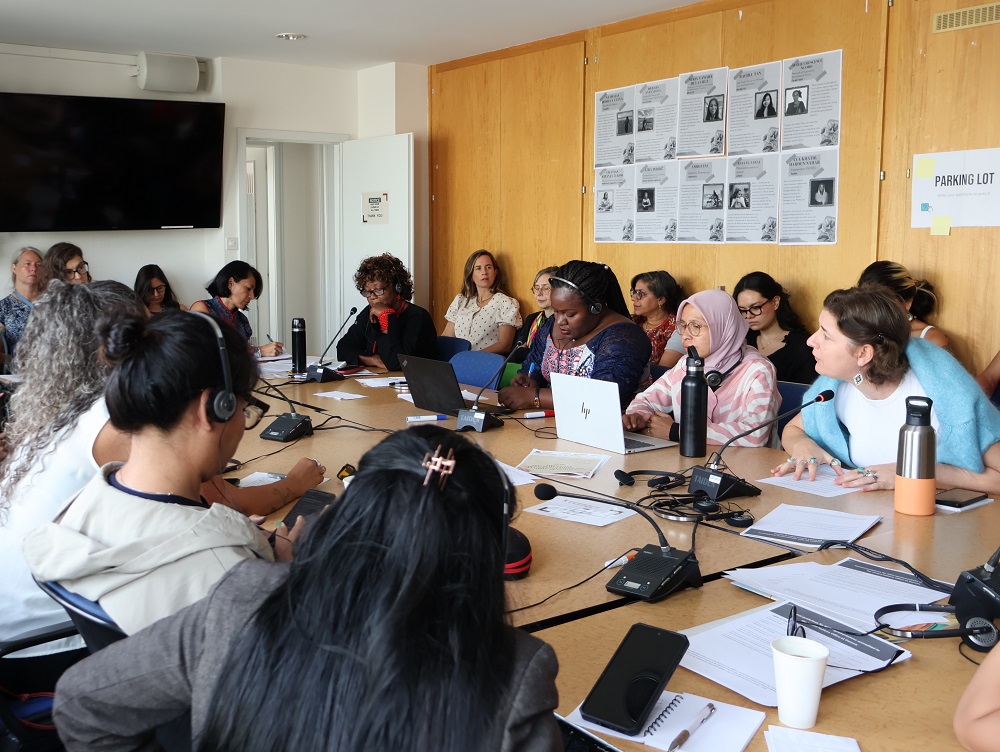
Held during the 63rd session of the Human Rights Council (HRC63), the Advocacy Week provided WHRDs with an opportunity to deliver oral statements on issues affecting their communities.
Gratias Kibanja Lukoo, from Women in Action for Human Dignity based in the Democratic Republic of Congo, spoke about how the climate crisis and conflict reinforce violence against women, restrict civic space and hinder the work of women human rights defenders.
Rana El Araj, representing the Anti-Racism Movement in Lebanon, addressed the situation of migrants in Lebanon, drawing attention to the challenges faced by migrant workers amid conflict and displacement. The statement highlighted barriers to information, evacuation, shelter and protection, particularly for people with precarious legal status. As the statement put it, “Exclusion begins when people are not recognized or considered in systems designed to protect them.”
Nuria Yamada, a member of the Movement for the Defence of the Forests and Watersheds of Tancítaro, drew attention to the damage caused by the avocado industry to the lives and livelihoods of Indigenous communities in Mexico.
Marie Crescence Ngobo, from the Network of Sustainable Development Actors in Cameroon, denounced how agro-industrial palm oil, sugar and rubber operations seize customary lands without consent, pollute water sources and subject women to violent reprisals.
Azra Berbić, environmental activist and lawyer and a member of the Foundation Atelier for Community Transformation, highlighted the challenges facing women environmental defenders in Bosnia and Herzegovina and the wider Balkans. Emphasising the importance of women’s involvement in decisions that affect their lives and communities, Berbić stated: “We call on States, international institutions and businesses to ensure effective, gender-responsive protection for women human rights and environmental defenders, to investigate attacks against them, end the criminalisation of environmental activism, and guarantee safe civic space and meaningful participation in decisions affecting land, water and common natural goods.”
Andriyeni from the Solidaritas Perempuan, Indonesia, raised concerns about land grabbing and ecological violence. Her statement highlighted how women depend on land and natural resources for their livelihoods but are often excluded from ownership and decision-making. She called for a different approach to development: “Development should reduce poverty, not increase women’s dispossession, violence, or exclusion.”
Nathalia Bonilla Cueva, a member of the Acción Ecológica, highlighted the shrinking civic space in Ecuador and the criminalisation of Indigenous peoples and human rights defenders.
Dilraba Anayatova, environmental justice researcher, addressed access to water and sanitation in Kazakhstan. In her statement, she called on States to take concrete action: “We ask States to recognise sanitation in law, publish sex-disaggregated data on sanitation in schools, and ensure that rural communities, and those who speak up, can participate safely and meaningfully in decisions about water and sanitation.”
Speaking of the conclusions of the 2026 WHRD Advocacy Week, Rachel Tan from APLWD called on the international community to address violations against human rights defenders and the nexus between gender, climate and conflict.
Together, these interventions demonstrated how environmental harm, land rights, economic interests and restrictions on civic space affect communities’ rights and security. They also underscored the importance of ensuring that grassroots experiences inform international decision-making.
Turning knowledge into action at HRC63
Practical training sessions introduced participants to the Human Rights Council, UN Special Procedures and treaty bodies, exploring how these mechanisms can support their work and help advance accountability for human rights violations.
Participants met with staff from the Office of the UN High Commissioner for Human Rights (OHCHR) working on the environment and climate change, civic space, business and gender. They also exchanged with representatives of UN Special Procedures mandates covering issues including discrimination against women, human rights defenders, racism, water and sanitation, food and climate change.
Meetings with Astrid Puentes Riaño, UN Special Rapporteur on the human right to a clean, healthy and sustainable environment, and Fernanda Hopenhaym Cabrera, Vice-Chair of the UN Working Group on Business and Human Rights, provided opportunities to discuss the defenders’ concerns directly with UN experts.
Participants also met diplomats involved in negotiations on gender- and climate-related resolutions at the Human Rights Council, sharing their experiences and outlining the action they wanted the international community to take.
Solidarity, peer learning and collective protection
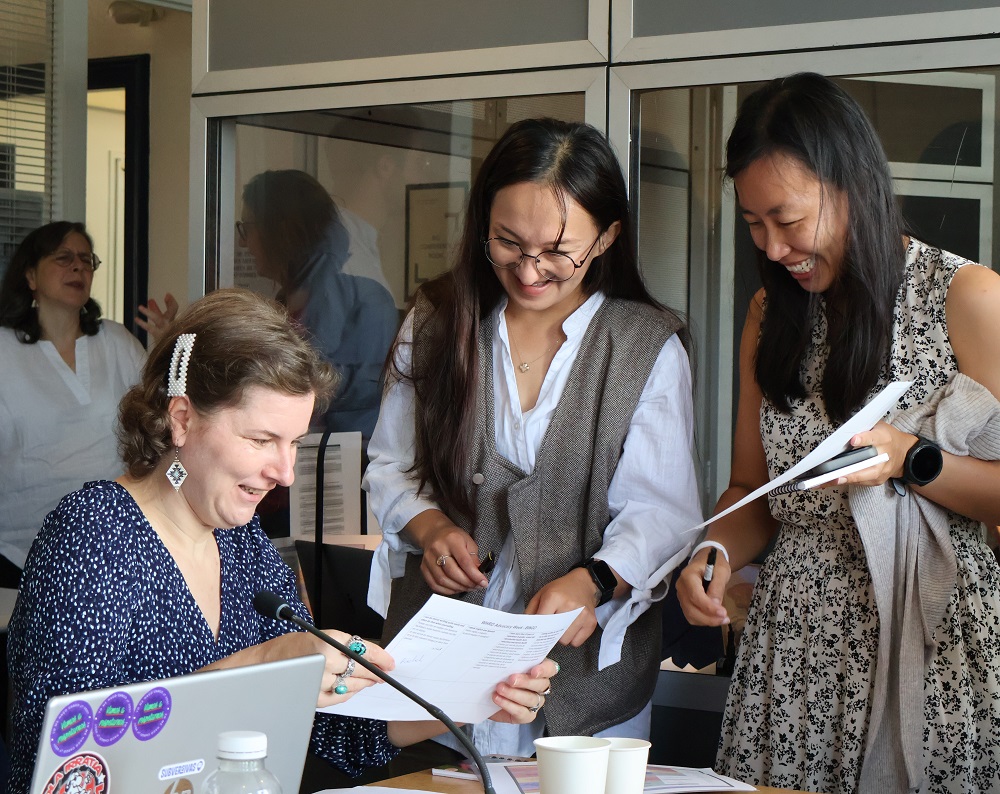
Beyond UN advocacy, the week created opportunities for participants to learn from one another and build relationships with civil society organisations working in Geneva.
Peer-learning sessions explored community conflict transformation and peacebuilding, activists’ resilience and safety, collective protection for grassroots women defenders, and how local experiences can challenge dominant narratives about conflict.
Dedicated sessions on wellbeing, care and resource mobilisation also addressed the practical challenges of sustaining human rights work.
The value of these exchanges was reflected in participants’ feedback. Dilraba Anayatova from Kazakhstan described the week as busy and educational, highlighting the sense of connection and solidarity she gained: “Sometimes we feel lonely and isolated, but here I met so many amazing people and now I feel connected and empowered.”
Azra Berbić said the Advocacy Week exceeded her expectations. Encouraging fellow women human rights defenders to persevere in their struggles, she emphasised the importance of solidarity and finding allies: “you are not alone, seek your allies wherever you can find them, they can be found in places where you expect the least.”
Connecting gender, conflict and environmental justice: a side event at the UN
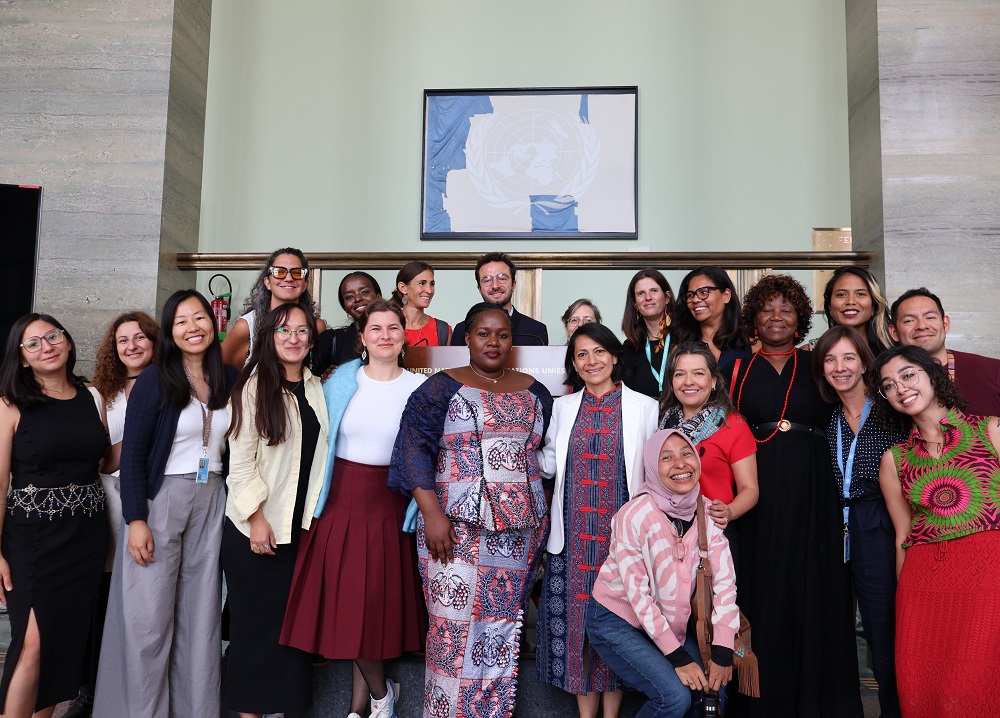
On 24 September, the side event “Gender, conflict, and environmental justice: The role of women human rights defenders” brought the Advocacy Week’s central theme into a wider public discussion.
Co-organised by ISHR, WHRDIC and several of its members, the event brought women defenders from Latin America, Africa and the Balkans together with Astrid Puentes Riaño, the UN Special Rapporteur on the human right to a clean, healthy and sustainable environment. Moderated by ISHR, the discussion explored how climate change, environmental degradation and exploitation of natural resources intersect with gender oppression and armed conflict. .
Climate change can intensify existing inequalities, increase pressure on natural resources and contribute to displacement and insecurity. Conflict can destroy ecosystems and livelihoods, leaving communities less able to cope with environmental pressures.
Experiences of women defenders illustrated why these issues require coordinated responses. Despite the risks, WHRDs continue to organise and protect their communities, bringing essential knowledge to discussions about environmental justice, gender equality and human rights.
The WHRD Advocacy Week 2026 was co-convened by: the International Service for Human Rights (ISHR), Women Human Rights Defenders International Coalition (WHRDIC), Amnesty International, Front Line Defenders, the Coalition of Women Human Rights Defenders in the SWANA region (WHRD MENA), Peace Brigade International (PBI), The Association for Women's Rights in Development (AWID), Urgent Action Fund for Feminist Activism and Asia Pacific Forum on Women, Law and Development (APWLD).
Photos by ISHR